What Do ADA Toilet Rules Mean for Milford Mill?
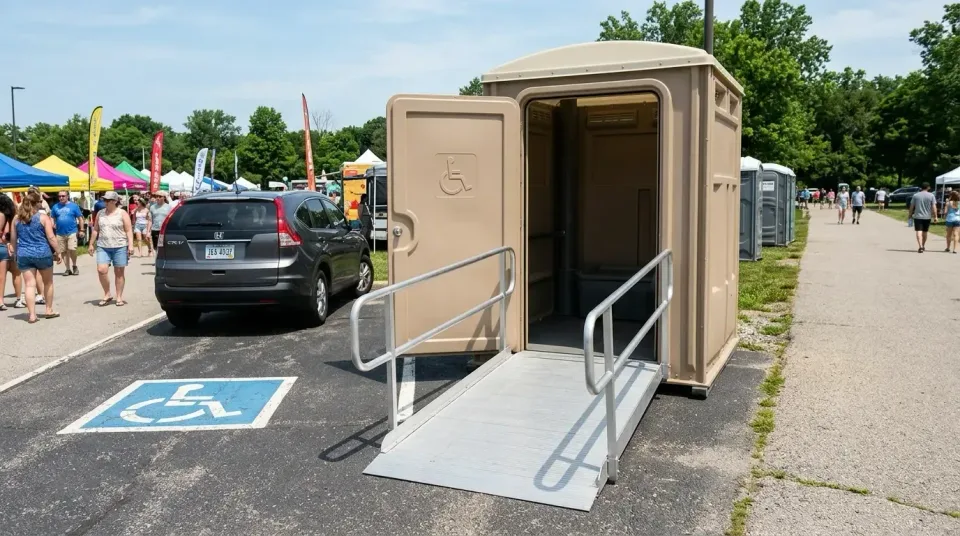
When an accessible restroom blocks wheelchair access, the unit’s label alone does not make the route usable. The 2010 ADA Standards §§ 213 and 604 address accessible toilet facilities and the features needed for people with disabilities to use them. For a portable unit, planning has to account for both the restroom and the approach.
That can be easy to miss on a crowded site. ADA unit footprint varies by model, so confirm the space before choosing a drop-off location.
In Milford Mill, we also ask customers to consider how freeze-thaw cycles can destabilize gravel and soil access routes. A firm path matters.
If your event or job is near Baltimore National Pike, check local forecasts before scheduling outdoor delivery; weather can affect both access and timing. Our crew confirms placement and delivery details before dispatch.
What do Sections 213 and 604 require?
If a portable restroom is meant to serve guests who need an accessible toilet, plan for an accessible facility and a usable approach not simply a unit marked accessible. The Americans with Disabilities Act’s 2010 Standards §§ 213 and 604 address accessible toilet facilities and the technical requirements for toilet compartments and rooms.
Applying those requirements to a temporary setup means checking the selected unit’s specifications and how people will reach and use it. A delivery spot beside a curb, parked vehicle, or muddy shoulder may defeat the purpose.
The Milford Mill Metro SubwayLink Station is one local reference point for busy public access; at a nearby gathering, guests still need a clear route from the event area to the restroom. Details matter.
Does the approach make an accessible toilet usable?
A wide door is not enough if someone using a wheelchair cannot reach the entrance, turn, or position themselves to use the facility. ADA-accessible units require more placement space than standard units, and the usable route needs attention too.
We check the drop-off location with the organizer, including whether event equipment, temporary fencing, or vehicle traffic could block access. The practical step is to measure and review the whole path before delivery, then keep it clear during the event.
At Milford Mill Park, changing ground conditions after rain can complicate a route; heavy rainfall can soften unpaved placement areas, so choose stable ground when possible. For another example of planning for guests’ routes, see our guide on placing event restrooms so guests can find them.
When should you ask a professional to check placement?
You can measure an open, level area yourself, but call for placement help when the site has a narrow entrance, uneven ground, a gate, or a route that may be blocked once setup begins. The Baltimore County Department of Health is a relevant local agency to consult about public-health matters; ask the appropriate authority or project reviewer which requirements apply to your particular site.
We can help identify a practical drop-off location and flag access questions before delivery, but a rental provider’s placement advice does not replace a code review. For readers comparing how other operators describe portable sanitation planning, Florida Toilet Rentals offers a separate example of restroom service information. Use the actual site conditions and applicable standards to make the decision.
How do service timing and weather affect access?
An accessible restroom must remain usable for the period people need it, so event planning should include service timing and site access. Clear delivery and pickup windows give organizers time to prepare routes before opening and keep equipment from being moved unexpectedly.
Dedicated account coordination can help keep those arrangements visible to the crew and the site contact. Confirm any delivery and pickup charges in the quote; distance, access, and the requested schedule can affect the overall arrangement.
In Milford Mill’s humid summers, high temperatures increase demand for frequent cleaning, so discuss anticipated attendance and service needs in advance. Freshwater supply also matters if the selected setup includes a fixture that needs water; confirm who provides it and how it will be maintained. Keep the route open throughout the rental, not just at arrival.
Which Portable Toilet Best Fits ADA Access Needs?
Choose based on who will use the facility, the site layout, and whether the setup is for a fixed event or ongoing work. A roomier unit takes planning.
| Option | Best for | Key detail |
|---|---|---|
| Standard portable toilet | General use where wheelchair access is not the specific need | Approximate footprint is 4 by 4 feet; not a substitute for an accessible unit |
| ADA portable toilet | Users who need wheelchair access | Footprint varies by model; confirm space and approach before delivery |
| Construction site toilet rental | Active job sites with recurring use | Choose a placement that keeps the route and service access practical |
|---|---|---|
| Restroom trailer | Events seeking interior fixtures | Polished event facilities may call for a trailer, but setup space and access still need review |
For a venue near Milford Mill Library or in Pikesville, assess the actual site before selecting a unit.
How Should You Prepare an ADA Restroom Delivery?
A Milford Mill event has reserved an accessible unit, but autumn leaves have collected along the route and the setup area is crowded. Clear the path before delivery.
Autumn leaves can obstruct drains and access paths, so inspect the route as well as the pad; an attendant-ready restroom presentation starts with an approach guests can use. Maryland is inland, but seasonal weather still affects planning.
-
Confirm the site contact: Share the delivery address, gate details, and a reachable on-site contact before dispatch.
-
Check the delivery route: A delivery team may use Honey Bucket equipment or other service vehicles, so identify clearance limits and keep the approach open.
-
Choose the placement area: Select firm, level ground and allow the accessible unit’s model-specific footprint.
-
Set the arrival window: Schedule delivery before the site opens so the route can be checked before guests arrive.
-
Protect the route: Keep vehicles, supplies, and event equipment from blocking access during use.
-
Plan for pickup: Leave the service approach open until the unit has been collected.
Ask the provider to confirm the agreed delivery window and placement before the event.
Need Help Planning an Accessible Restroom?
An accessible portable toilet needs more than a suitable unit: its approach and placement must work for the people expected to use it. Act early if wheelchair access is blocked, the ground is uneven, or the drop-off area is tight.
At Liberty Road Shopping Center or elsewhere near Old Court Road, the route and site layout should be reviewed before delivery. PolyPortables is one manufacturer name customers may encounter while comparing equipment; check the specifications for the actual model in your rental agreement.
For a practical placement conversation, contact Maryland Toilet Rentals and share your site layout, timing, and access concerns.